
Why NJ keeps losing power — and what would actually fix it
We talked about this on the show yesterday, and I could hear it in every caller's voice — the same question, asked five different ways. Why does the power keep going out? And why can't we just bury the lines already?
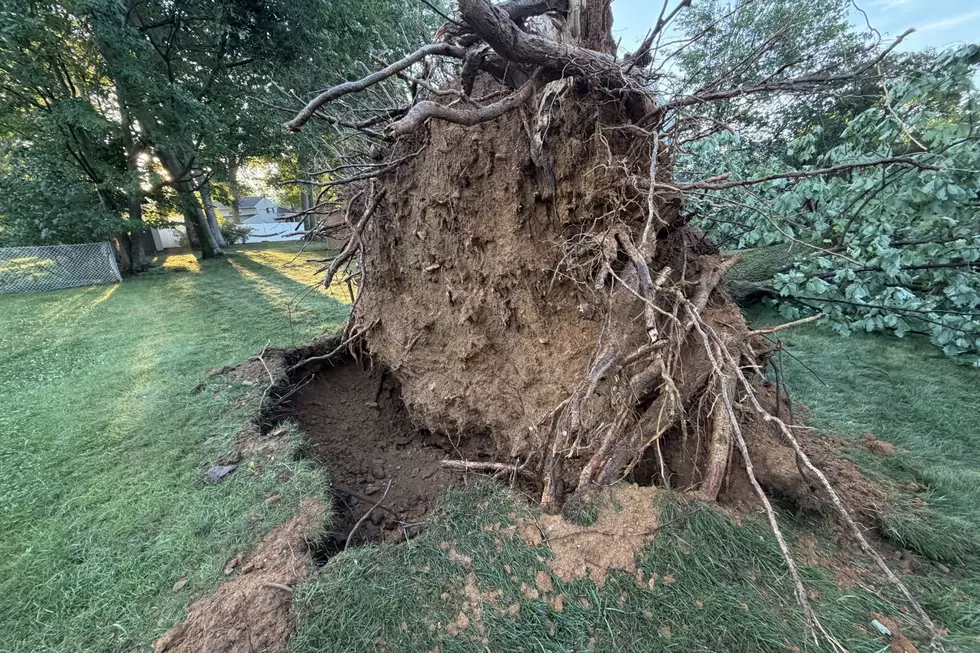
I am not an engineer. But after the storms that tore through New Jersey from Friday night, July 3, through Monday afternoon, July 6, the pattern was impossible to ignore. Straight-line winds gusting past 70 miles per hour ripped north to south through most of JCP&L's territory. In Scotch Plains, a tree limb came down onto a moving car on Raritan Road and killed 41-year-old Jared Hirschowitz. That is not a statistic. That is a family that lost someone because a tree fell during a thunderstorm.
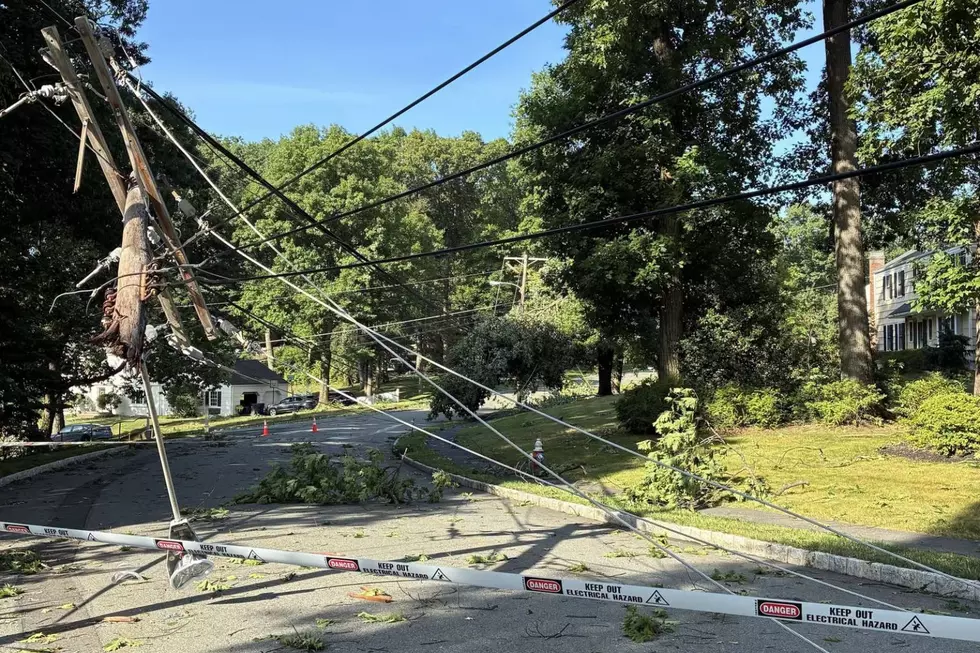
By Saturday afternoon, more than 92,000 customers were without power statewide. By Monday morning, roughly 55,000 were still dark — day three, in 100-degree heat that had baked the region for days before the storms even arrived. JCP&L had 1,700 crew members working 16-hour shifts trying to catch up.
That old elm in your front yard looks beautiful. It has probably been there since before your house was built. But every mature tree near a power line is a small, patient threat, and when a severe storm rolls through, it is not just your tree that comes down — it is hundreds of them across the entire storm path at once. With that many trees down simultaneously, utility crews cannot possibly get to everyone quickly, no matter how hard they work.
So what is the actual answer? Cut them down? Trim them back harder? The most common suggestion I heard from listeners was simple: bury the lines. One caller pointed out something sharp, though — even the underground lines in a neighborhood are usually still fed by an overhead pole or tower somewhere upstream. Burying your street does not fully solve the problem if the feeder line fifty yards away is still hanging from a pole.
SEE ALSO: Those new utility polls going up across NJ — here's what they are for
The math behind burying the lines
A listener named Anthony Migliazzo from Scotch Plains, who grew up in Kansas City, emailed after hearing the discussion and shared some research he had put together comparing storm patterns there to what he has noticed here in New Jersey. The numbers he found line up with what utility engineers have said publicly for years.
Building a new overhead distribution line costs somewhere around $150,000 to $300,000 per mile. Retrofitting an existing suburban neighborhood to put those same lines underground runs $2 million to $5 million per mile — roughly ten to fifteen times more. Burying every overhead line in New Jersey would be a multi-decade project on the order of $30 billion, and that cost would land entirely on ratepayers' monthly bills. That is why no state, including places that deal with tornadoes every spring, has done it wholesale.
Here is the detail that actually surprised me. Midwestern power lines are not underground because tornadoes taught anyone a lesson. They are underground because they were built that way in the first place — post-1970s subdivisions where trenching was cheap during original construction. Older Kansas City neighborhoods are overhead, same as ours. New Jersey's real problem is timing: this state was essentially built out by 1960. There is almost no undeveloped land left where burying a line is the cheap option. We are stuck retrofitting instead of building fresh, and retrofitting is what costs a fortune.
Why this keeps happening anyway
The deeper issue is not just cost. It is how utilities are paid.
Under the regulatory system utilities operate under, a company earns a guaranteed return on capital projects — new poles, new substations, grid hardening. Tree trimming and vegetation management, on the other hand, is treated as a pure operating expense. It earns the utility nothing, and residents fight aggressive tree removal town by town anyway. Storm restoration costs typically get recovered afterward through rate riders passed to customers. The incentives do not point toward the fix that would actually prevent the outage in the first place.
You can see the difference play out inside our own state. PSE&G's post-Sandy Energy Strong hardening programs let the utility earn a return on roughly $2 billion in approved capital investment, which lines up the incentive correctly — and PSE&G generally restores power faster after storms. JCP&L, a subsidiary of the Ohio-based FirstEnergy, was formally sanctioned by state regulators over its response to Tropical Storm Isaias back in 2020 and remains the more frequent laggard in these events.
What actually works
The realistic playbook is not "bury everything" and it is not "just trim harder." It is a handful of specific, already-proven moves. Bury only the small number of worst-performing circuits that generate a disproportionate share of outage hours — that is where the enormous underground cost actually makes financial sense. Use covered, insulated conductor wire everywhere else, which survives a falling limb that would snap bare wire, at a fraction of full burial cost. Sectionalize the grid with automated switches so a single fallen tree isolates one block instead of five thousand homes. And put real teeth into vegetation management — fixed trimming schedules, audited by the Board of Public Utilities, with actual penalties for utilities that fall behind, and state-level authority to cut through the town-by-town fights that slow tree removal down in the first place.
The political argument burns hot on talk radio for a week and then fades. The actual decision gets made months later in a BPU rate case that almost nobody is paying attention to. That is where this really gets settled — not in the comment section, not on the air, but in a filing most of us will never read.
I don't have a tidy ending for this one. I just know that 55,000 homes sitting dark on day three, in a heat wave, is not something we should treat as normal. It has been happening more often. It deserves more than a shrug and a generator.
Which states have the most expensive electric bills?
Gallery Credit: New Jersey 101.5
